One of the sites we optimized is a real-world stress test for WordPress speed work: a content-heavy SEO site (xsquareseo.com) running 1,500+ URLs on Elementor, hosted on shared hosting. No theory here — just the real before/after numbers.
The Problem
The site was slow for everyone — first-time visitors and repeat visitors alike. Not “slow on a lab test” slow. Actually slow, in real users’ browsers.
Why It Was Slow
Nothing exotic — just the usual pile-up of issues that happens on most WordPress sites over time:
- Every page was served directly from the origin server, with no CDN
- No Cloudflare in front of the site
- No CSS/JS minification
- Images served as JPEG/PNG instead of modern formats
- No caching at all — every page was generated fresh for every visitor
- Fonts weren’t optimized or preloaded
- The WordPress backend itself was slow
And this wasn’t a small brochure site. We’re talking about a shared hosting environment running 1,500+ URLs on Elementor — a page builder that’s notoriously heavy on resources. That combination (shared hosting + high page count + Elementor) is exactly the setup most “speed guides” don’t actually solve for.
What We Did
- Put the entire site behind Cloudflare, so pages are served from the server nearest to the visitor instead of a single origin
- Minified all CSS and JS
- Converted and compressed all images to WebP
- Preloaded key fonts to kill render-blocking delays
- Preloaded and cached every page/blog properly, combining FlyingPress and Cloudflare caching so pages are served instantly instead of rebuilt on every visit
The Results (Real-World Data, Not Lab Scores)
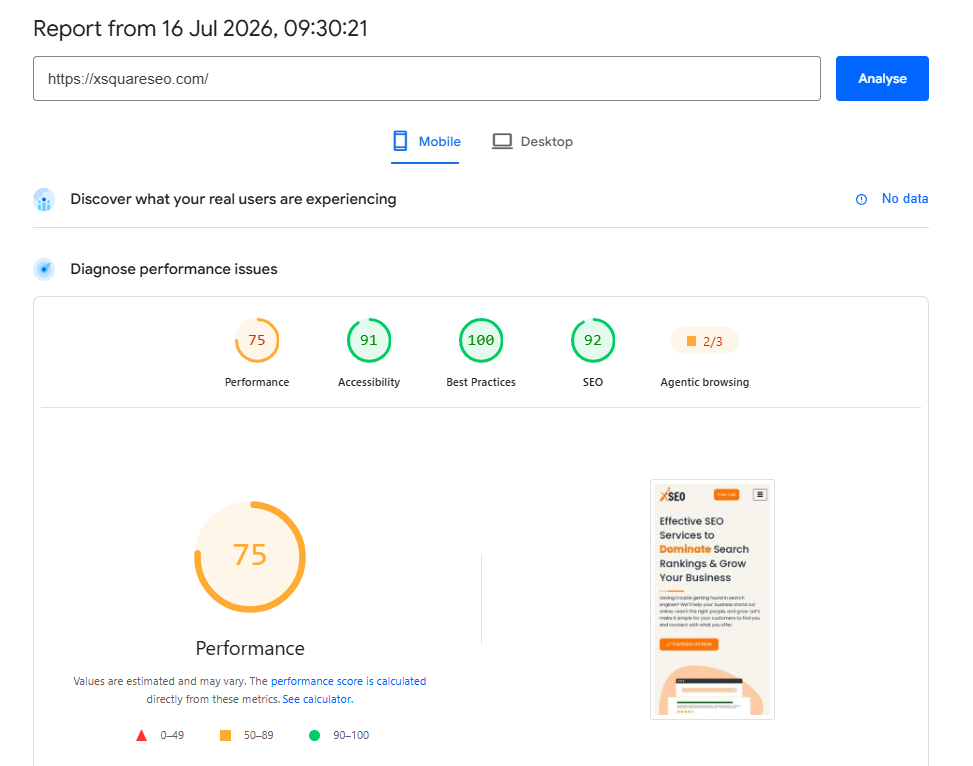
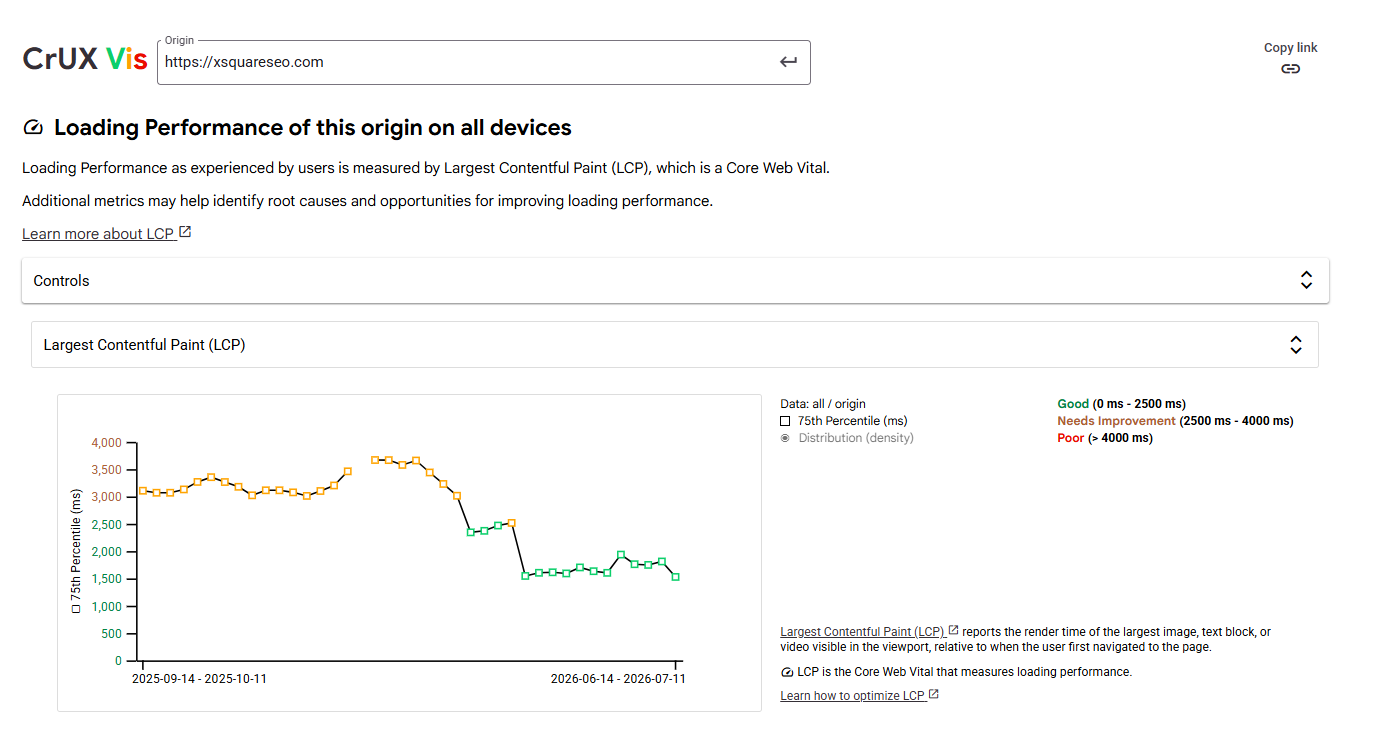
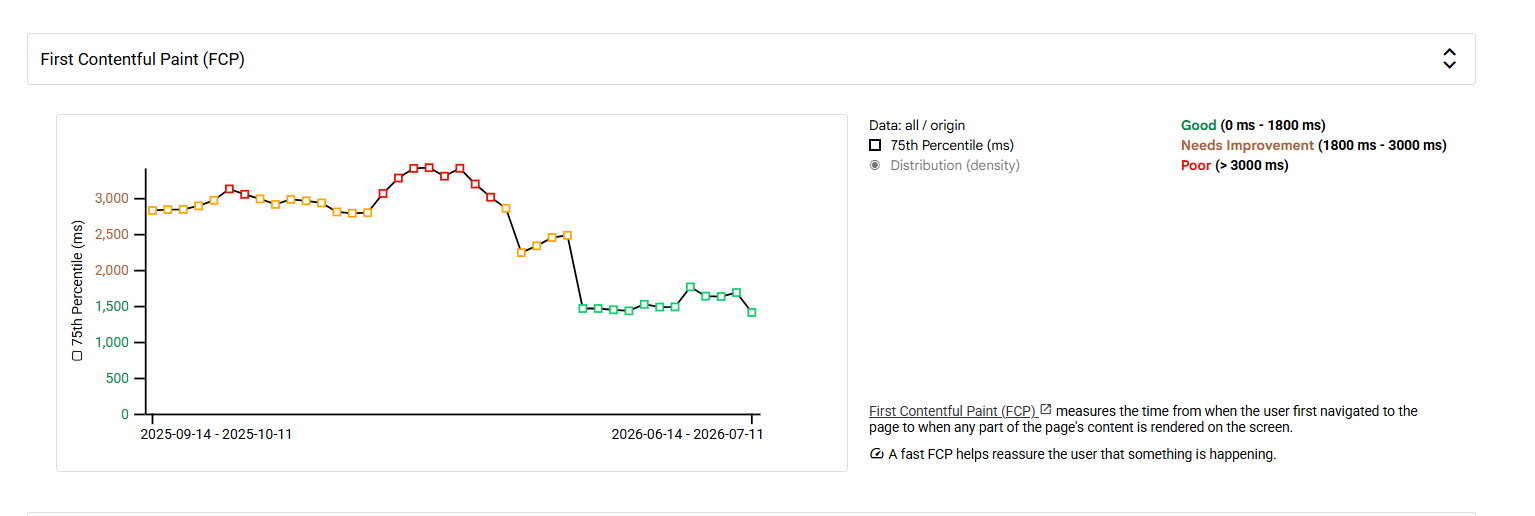
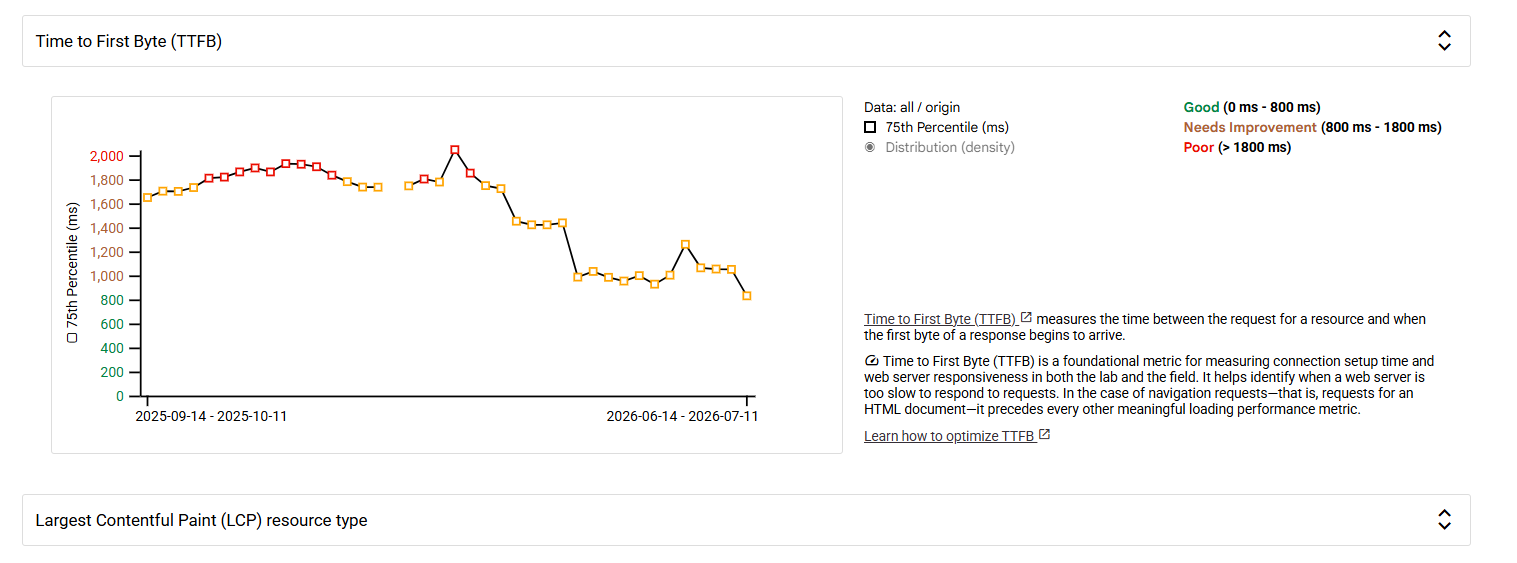
We’re not big believers in lab tool scores — they don’t reflect what actual visitors experience. So instead of PageSpeed Insights numbers, here’s the real Core Web Vitals data straight from CrUX Vis, Google’s own tool for field data collected from real Chrome users, covering 14 Sep 2025 to 11 July 2026.
| Metric | Before | After | Status |
|---|---|---|---|
| LCP (Largest Contentful Paint) | 2516 ms | 1527 ms | ✅ Pass |
| INP (Interaction to Next Paint) | 434 ms | 141 ms | ✅ Pass |
| CLS (Cumulative Layout Shift) | 0.16 | 0.01 | ✅ Pass |
(Note: we don’t have a saved “before” screenshot — the CrUX report itself shows the full before/after trend clearly over this date range.)
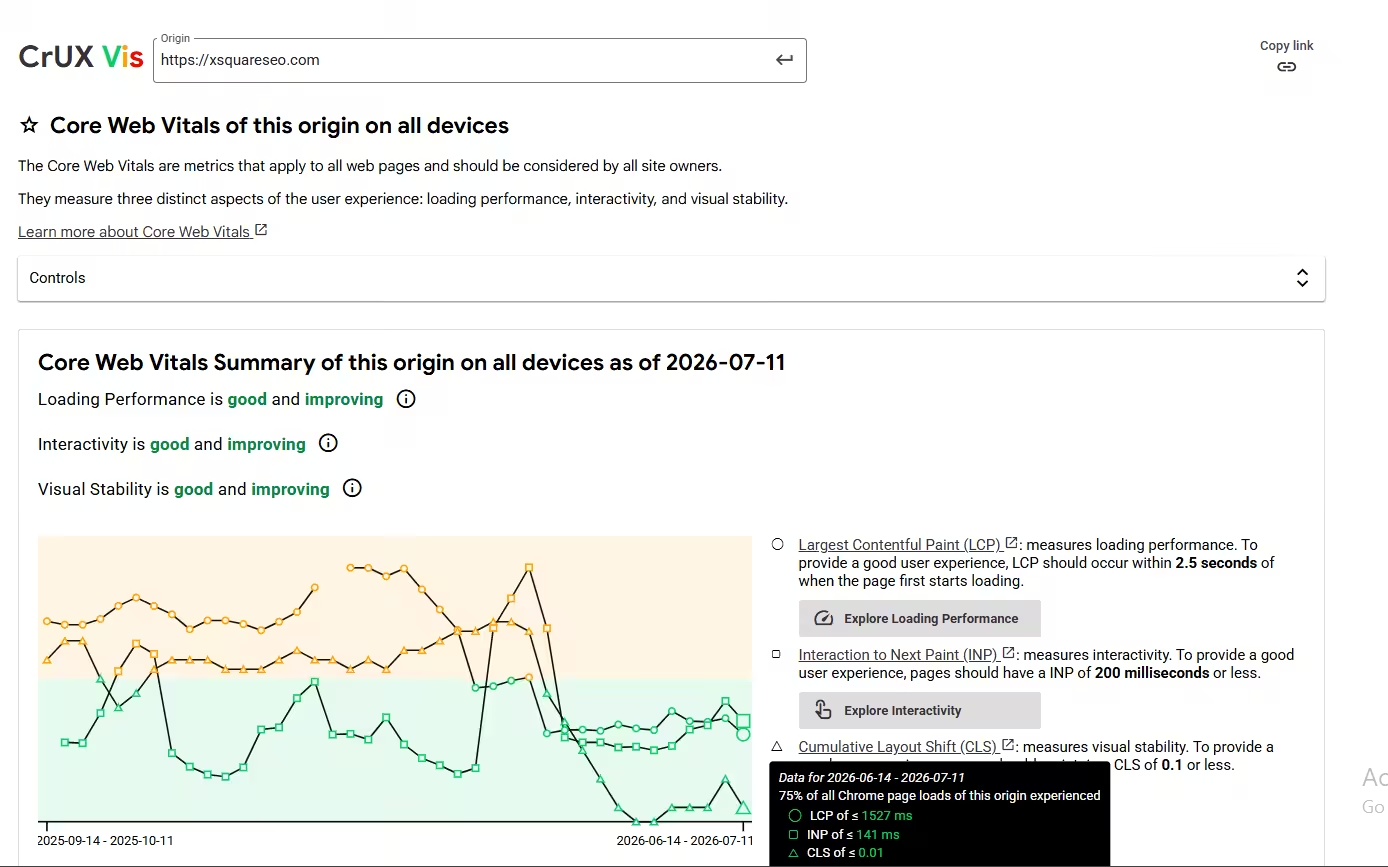
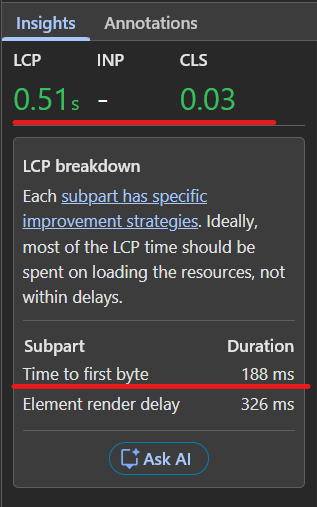
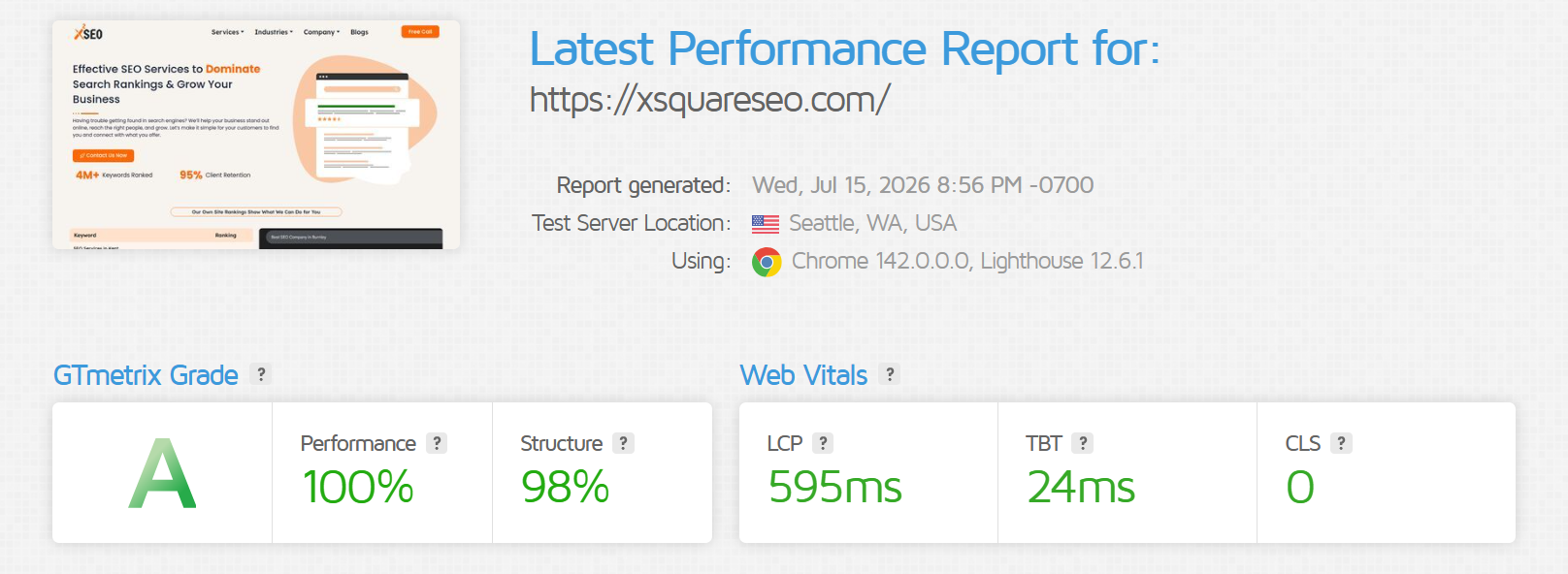
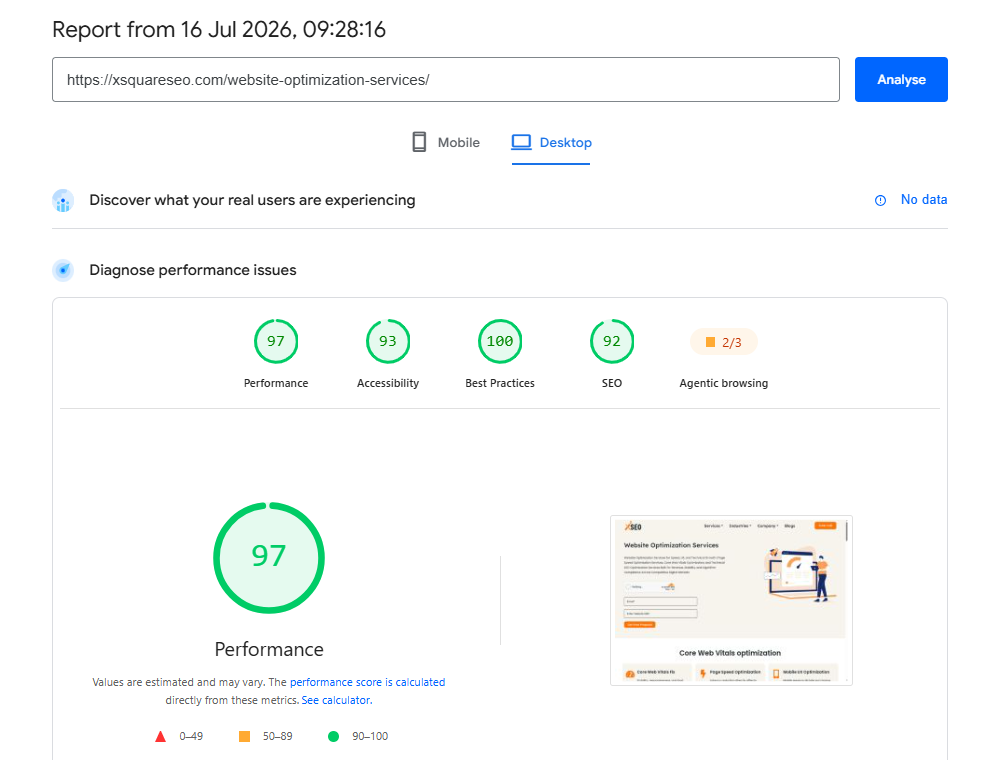
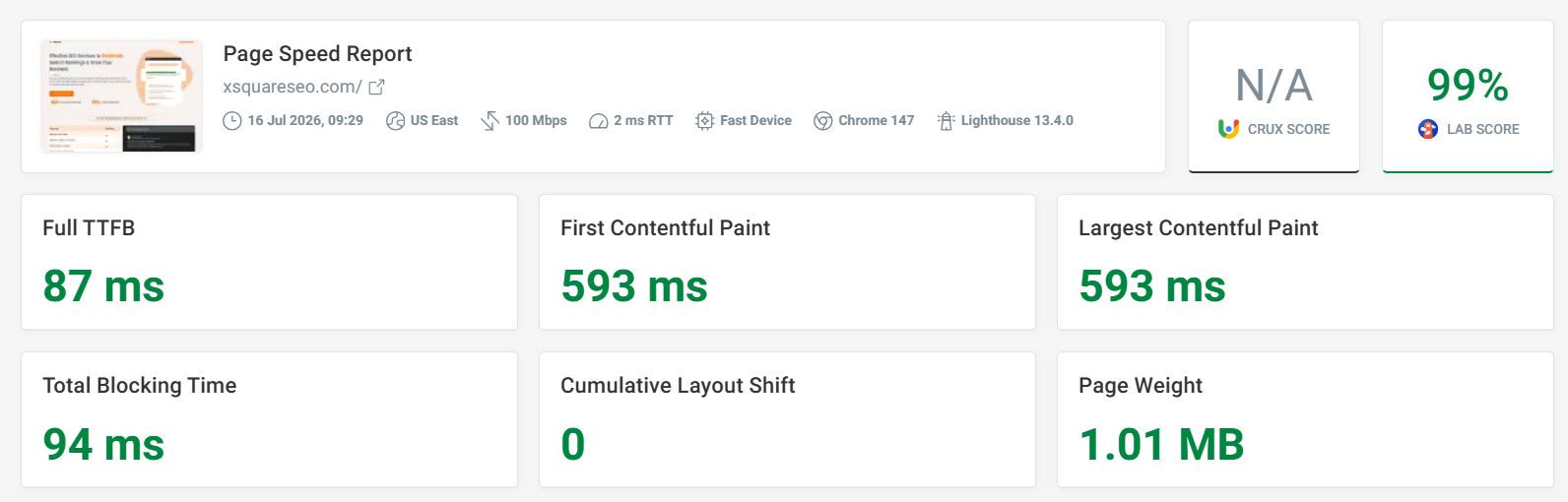
The site now passes all three Core Web Vitals thresholds, based on real visitor data — not a one-off lab test.
Why This Matters
Making a lightweight site fast is easy. Making a 1,500+ page, content-heavy, Elementor-built site on shared hosting fast — and keeping it fast for both new and returning visitors — is a different problem. It takes the right stack (Cloudflare + FlyingPress) and knowing exactly what to configure and in what order.
This is the same process we use for every client site. If your WordPress site is struggling with the same issues — no CDN, no caching, unoptimized images and fonts — this is fixable, even at scale.
More Relevant Images